While spending time in architecture studios…
Architecture

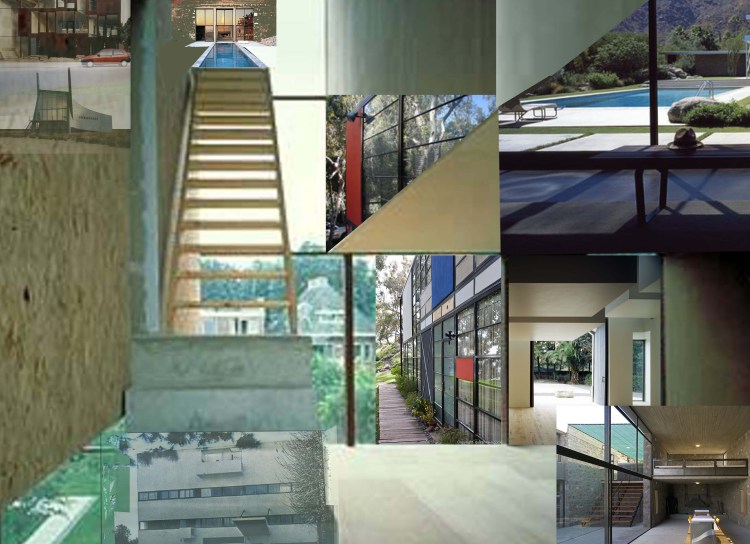
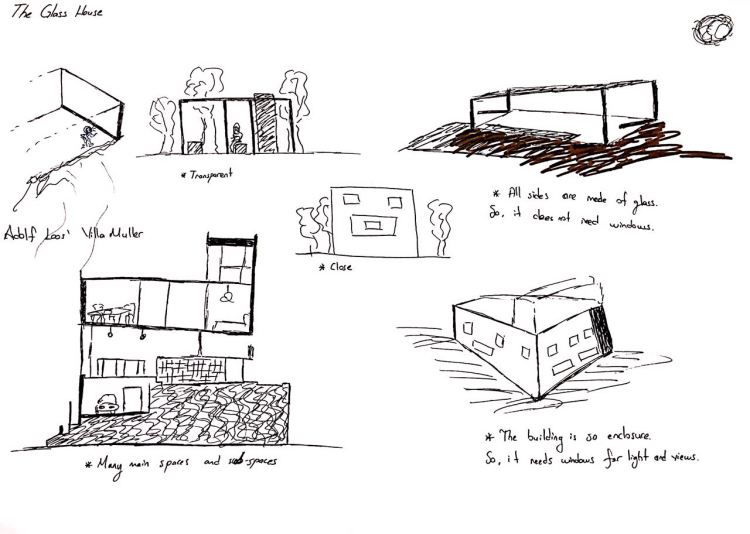
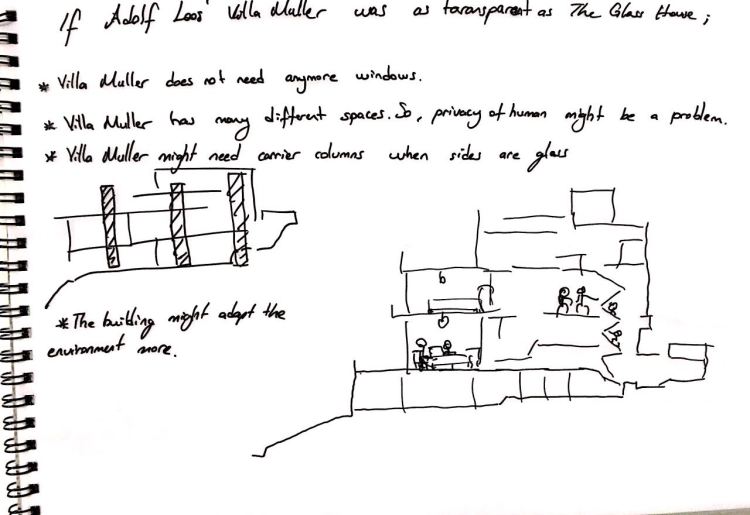
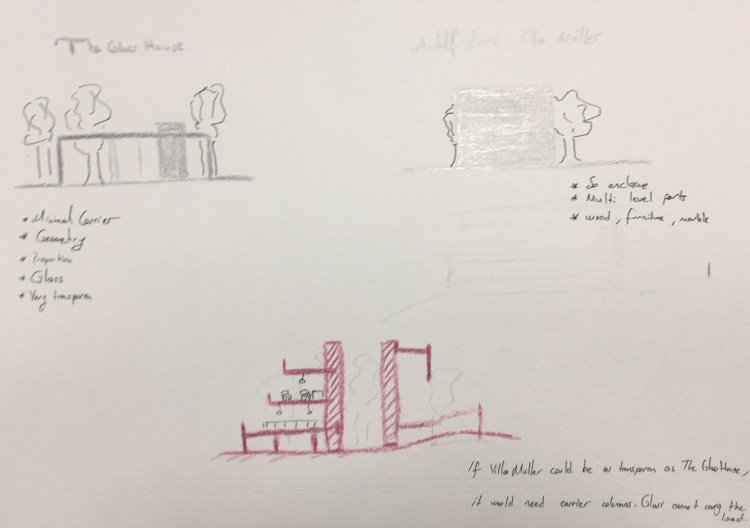
What if Adolf Loos’ Villa Muller was as transparent as The Glass House


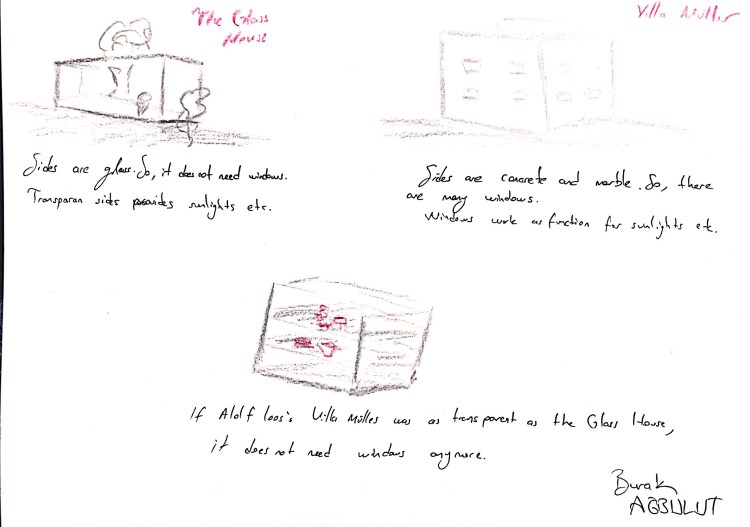
Material List:


In final jury, my jury buddy was Burak Ağbulut again and I tried to take some notes for Burak’s project in order to share with him. His strategy is protecting vista while breaking the direction to horizon with different spatial spaces and levels. Additionally, the major purpose of his project is to lead visitors through diversified spaces and it provides various visual experiences to them. There are paths variation and alternative paths to direct visitors to horizon. Also, there are several architectural elements such as ramps, stairs, and openings and these openings make relation between visitors and sky. Accordingly, these elements ensure level differences and diverging vista experiences.
Burak’s design was criticized by the jury and they mentioned that the design was good in general but there were too many elements. Addition to this, they stated that this amount of element is not required in his design. Also, it was thought that the structure was were confusing and the scale was pretty big. It was suggested that the complexity of the spaces should be decreased and be more controlled. The reason why the complexity is uncontrolled is that there is used too many arches. However, jury members said that he should have taken them under control. As it is mentioned before, according to jury members Burak had used many unnecessary elements. In addition, they added that the design was too big and bulky. In addition, it is highlighted that ideas were enough to produce the spaces yet there was no space variation. Additively, it was emphasized connections and relations of spaces were weak; the details were disappeared. As a result of these, the design perceived a bit deficiently. Thus, the total idea of the design was not purely understood by the jury. And the final comment about the design was that the design was quite successful as a villa, except that there is no need such villa in Salt Lake.
When we talk about the poster, according to the jury the diagrams were not reflecting the features of the design. In addition to this, there were some mistakes in the drawings. For instance, the west elevation had been drawn wrong. Accordingly, the section lines had been drawn too thick that some details of the plan drawing were not seen. Also, the jury expressed an opinion about the lack of necessity of the section which was passing through between the ramp and the stair. Last but not least, they mentioned that the other section drawing is unnecessary since they could see those details from the other drawings.
In sum, in the final jury, the jury members approved Burak’s design despite several mistakes such as using too many elements, making the design very complex, and scratching some wrong drawings. The jury members stated some good and points of his design and they added some suggestions for him. For instance, he should have used less elements, had better ideas regarding the variation of the spaces, and had well-drawn drawings.
Mutlu
In briefly, my inference is that I need to pay attention to drawing mistakes and in terms of project or strategy, I need to make more simple design. I created many different experimental spaces but they should be increased.
Mutlu’s Project Jury Reports from Burak AGBULUT
In Mutlu’s Project, mutlu pays attention the orientation of human. He says according to my observation human orient to horizon which is wonderful Vista. His project’s strategy is almost all about the horizon. While his spaces and paths are orienting people to horizon, the levels change. He enriches the Vista of horizon with different levels. Throughout Cappadocia analysis, he grafts some spatial conditions on Tuz Golu.
His first main space on the level of Salt Lake then spaces merge ground as second main space and third main area covers either below and above the ground. In the design, levels are changing and that provides different experiences for human.According to Jury members, while the main spaces are changing, there is weak transition parts. Jury said you wish you design the spaces as a whole. There is weak transitions such as really small areas and it causes less controlling.
The levels are changing directly but they should be experimentally. There is a big changing between spaces like above the ground and below the ground actually it is good for acquiring different experiences but the changing should be gradual not suddenly. There are stair and ramps in the design but the stairs not so well, they seem like mass. Walls are weak to stand the mass.Then, composition can be better in the design.
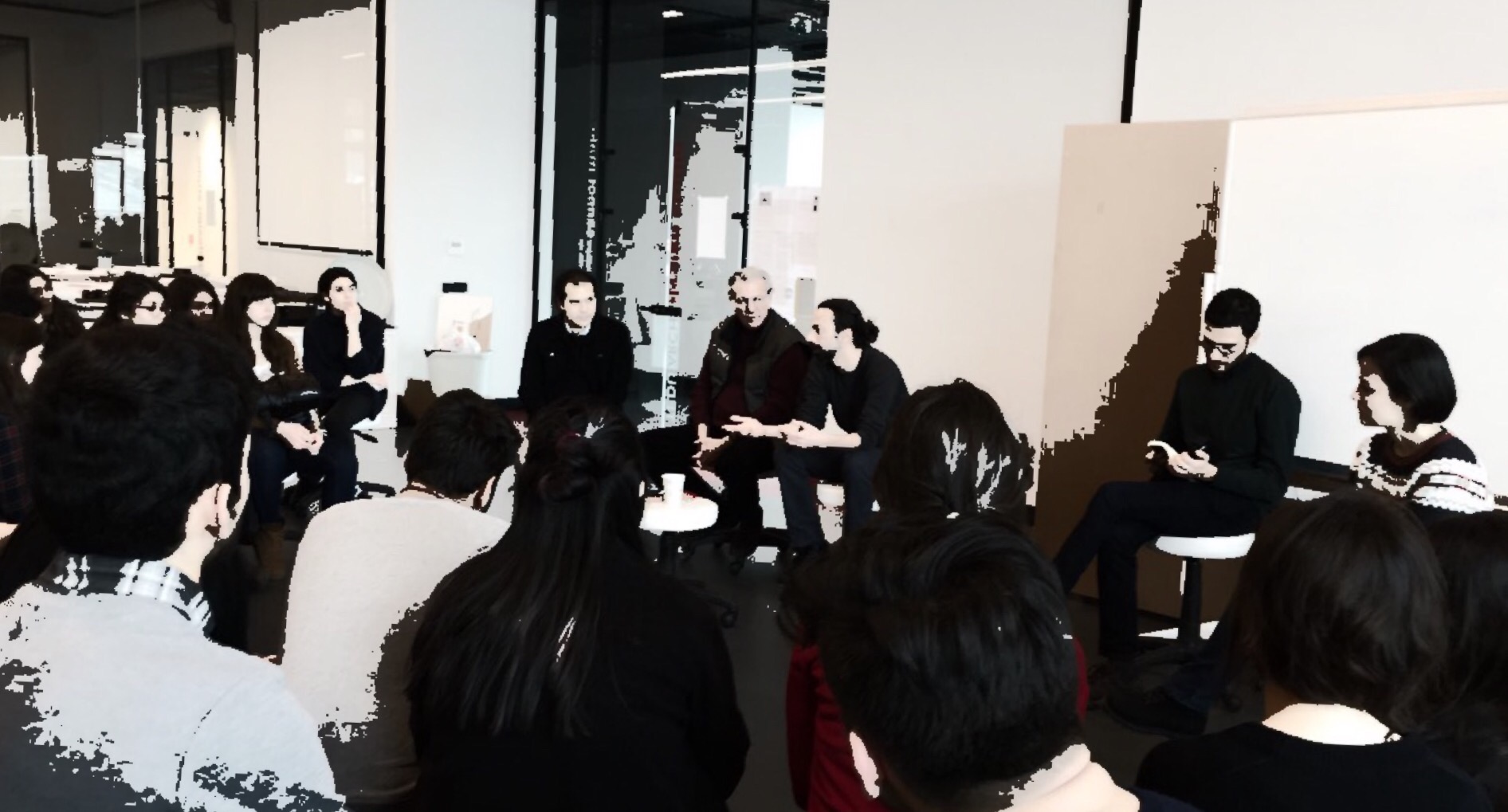 Today, we had a colloquium as the members of the stuio. We talked about the course and what we have done until today. We criticized human scale and spaces in a relation. We also took short information about second semester.With this meeting, the first semester is finished… Second semester, functions will be achieved…

The poster includes sketches, diagrams, plans of 3 different codes, 6 sections, 3 elevations, 1 isometric drawing. Elevations, and isometric drawing has shadows according to sun rotation. There is site plans which are 1/500 and 1/20.000. In 1/20.000, there rotation of wind and rotation of the sun. In 1/500, the location on the topography can be observed much better.
As you see from sketches and drawings from poster, there is dominant orientation to horizon which is the ends of the mountains as a line between ground and sky. It is actually really a wonderful vista that is why people are interested in the horizon. The orientation leads to a direction. While the project is breaking the direction,it protects the visual relation with the vista and it enriches the vista with different levels, frames etc.The model consists of three main spaces. One of them which is the first one, on the slope, feels the slope and enrich the slope particularly. The second one plays actually like a transition part and it does not touch the ground. The third main spaces is combined and located on the salt which the flat land. Between the three different main parts there is physical relation and visual relation obviously.The topography of the salt lake has slope which ends on the flat land as you see from diagrams and model. The spaces provide different experiences for human and human goes down, I mean human goes the flat land(salt area) with these different experiences. The level changes are not directly. Human changes level experimentally.
Furthermore, you see at the right of the poster some sketches. These sketches tell that the model has different paths horizontally.It means they diverse in between themselves. For example, one of these starts from the beginning and it end on the salt, the other one starts middle of the slope area and it and on the salt area, one of them starts from the beginning which is the before the slope and it ends on positive code. These all provides different experiences and it makes the vista and the environment rich.


The black part in the model represents the salt area in real. The levels which are changing represents contour lines from topography. The model is designed by the white photo-block. There are different kinds of stairs. Some of the stairs have gaps between the footsteps and it provides visual relation. Some of them has space under themselves and it provides visual experience with another space. There are ramps which are connection units for the spaces and paths. The ramps help human to arrive the flat land. The model has different openings. Spaces, openings, paths , and the other architectural elements multiply and diverse in between themselves.
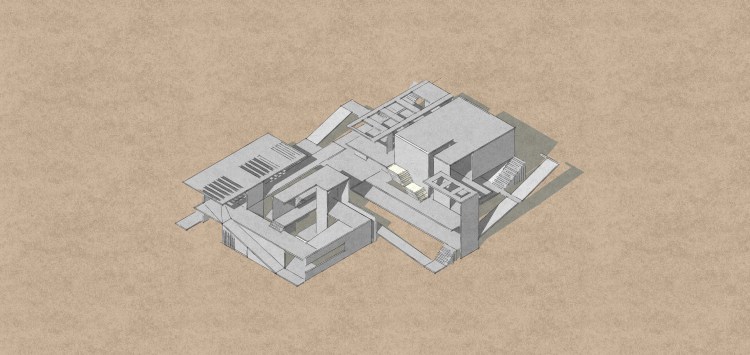
That is the isometric drawing as a sketch style.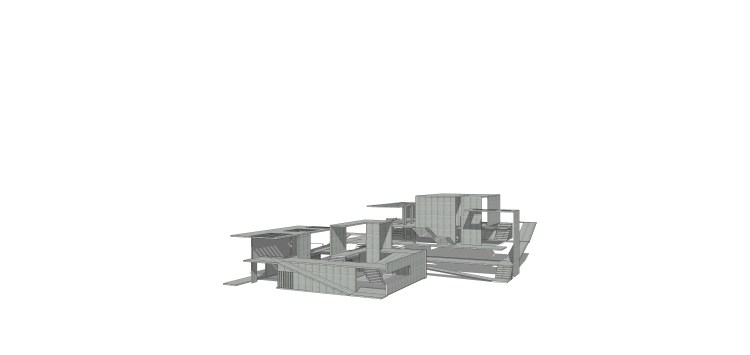
In terms of tectonic. The project material is concrete all.The photograph is an example for the showing material is the 2 points perspective drawing. The columns and stairs, too. The columns are not just for structure actually, for example their measure is like the 20cm*150cm etc. Their purpose is either standing the mass and creating space. Columns divide the spaces.
The tradition of Persian religious architecture matured after the ninth century in various political context.In Uzbekistan, Persian style a capital is created by Timur. When the Safavid Dynasty reclaimed most of Persian during to late sixteenth century, Shah Abbas I began the process of doubling his capital of Isfahan as an immense garden city, with a grand Medan plaza, a new Friday mosque and a grand foundation boulevard for the villas of the aristocracy.
Timur constructed a series of grue some pyramids out of skulls of his victims. Timur trusted Persia –architects to reproduce a traditional sacred Court. Timurid’s assembled an empire that stretched from Baghdad to Delhi.An pistq exist on each side and a deep Iwan can be observed flanked by two thin minarets. Furthermore, we can say Timur’s showcase capital is Samarkand which is the ancient city. In fifteenth century Timur commissioned the Great Mosque of Bibi Khanym. In the mosque there hypo style prayer hall.And each corner carries slender minarets.


Reference: World Architecture: A Cross-Cultural History by Richar Ingersoll.
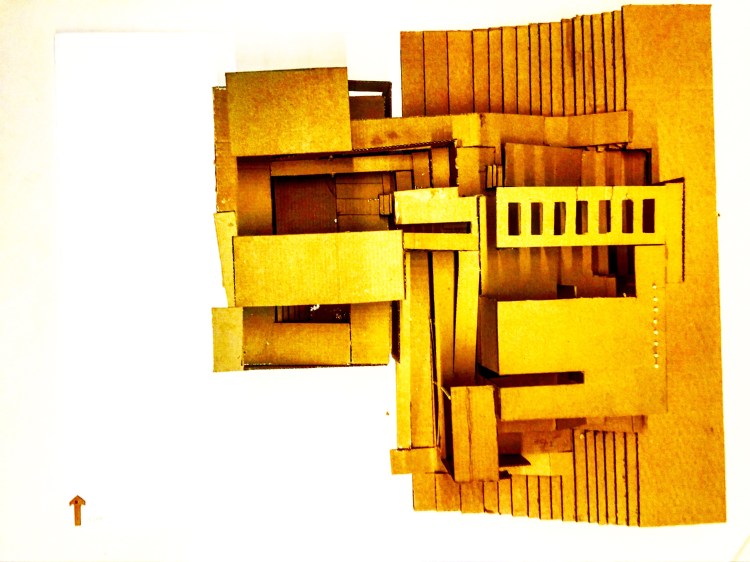
There is a direction to horizon in Tuz Golu. The strategy of that model is the orientate people to different direction while protecting vista of the horizon. The protecting is like that, that model presents different paths, levels and different spaces for human scale. And, the view of vista shaped differently, I mean there are different frames in the project and it provides different visual experiences.


The project is located between ground and flat (salt) area. One part is located on slope area one part is do not touch ground and the other main part is located on flat land. As you see the photographs, there are different ways from different levels for people, the ways provide to reach the flat land as differently. There are different openings on the model, the openings for visuality. There are ramps and stairs to reach different levels. There are columns to stand the loads and also the columns divide tha spaces and shapes the spaces.


Observations / Interpretations / Goals / Strategies:
A1: What is the experience and/or quality that you value the most among all that you have observed on Tuz Gölü?
A2: How do you understand the metaphor “grafting” as given in the project, especially in terms of the difference that it implies from simply “applying one quality from one context to another”? How do you attempt to reflect that difference in your design?
A3: How do you understand the concept of diversity? How do you attempt to create a diversity of spatial experiences in your design?
A4: How do you understand the concept of multiplicity? How do you attempt to create a multiplicity of spatial experiences in your design?
A5: How does your design strategy attempt to meet the goal of creating diversity and multiplicity of spatial experiences by grafting Göreme onto Tuz Gölü?
B1:The scenario in this case is the organizational structure that the diverse and multiple spatial experiences relate to each other, in a decided order. What is the scenario that you are drafting –not a possible scenario; there are many possible ones that can all relate to your design strategy; what is the one, in detail, that you have decided upon and work with?
(As a general reminder for the scenarios; please keep in mind that certain concepts that your design strategies emphasize are not the only means of forming diverse and multiple spatial experiences. In addition to them, there are a number of other aspects that we had studied in the beginning of the semester, all of which are expected to be reflected in your designs. Two of such are the varieties of bodily experiences of movement and the varieties of scale.)
C1: The term tectonics refers to the art and science of construction, and of human production in general; how we get to get this design into physical existence, in its material and structural design decisions. Many of you still refer to your designs as “my model”. Please remember that this is Architectural Design I Studio; we are not designing models here. So: what is the tectonic approach in your design, in relation to your design strategy and all related design ideas and applications?

 Burak Ağbulut